
Balatonfűzfő: Observatory, culture and active days
Accommodation in Balatonfűzfő
Balatonfűzfő brings together a visit to the observatory with church architecture, water sports and other activities. The offerings cater to a range of interests, from astronomical observations and architectural history to bobsled tracks, climbing and sailing lessons. When choosing a holiday destination, you can consider which of these themes you want to shape your stay and how much time you would like to devote to them.
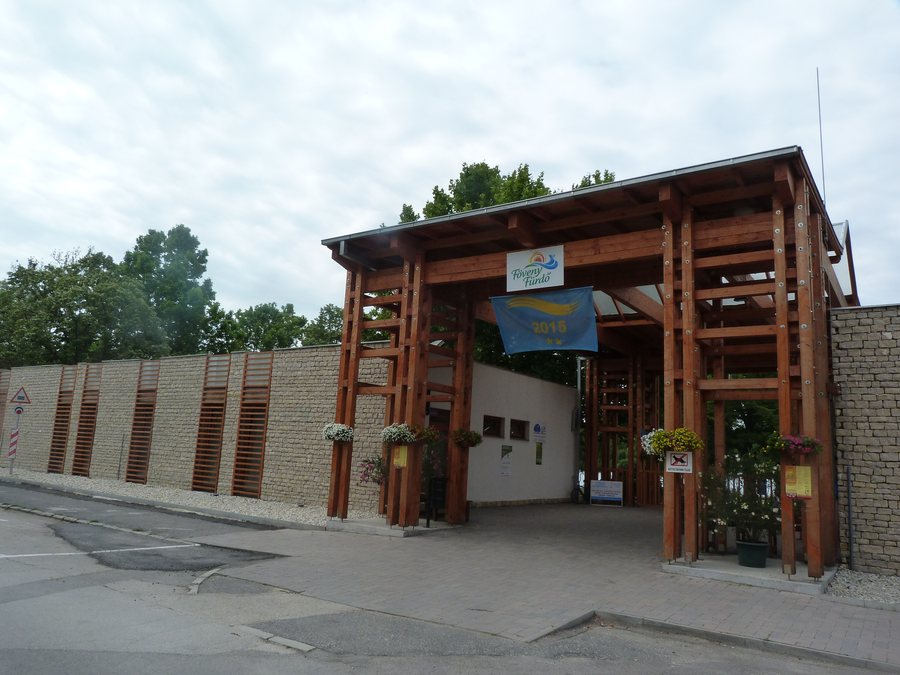 File:Fövenystrand - Balatonfűzfő, 2015.08.03.JPG
Photo: Derzsi Elekes Andor via Wikimedia Commons, CC BY-SA 4.0
File:Fövenystrand - Balatonfűzfő, 2015.08.03.JPG
Photo: Derzsi Elekes Andor via Wikimedia Commons, CC BY-SA 4.0
Astronomy and architectural history
The virtual planet tour “Kozmikus utazás” is offered at the Balaton Csillagvizsgáló Tudományos és Kulturális Központ for HUF 2,500 per person. The Balaton Csillagvizsgáló was renovated and reopened in 2012. Observations in the dome are possible under the guidance of astronomy experts; you must arrange an appointment by phone in advance to visit the observatory. This offers two distinct ways to explore astronomy: the virtual planet tour and observation in the dome. Check the current program when planning your visit, and arrange the required appointment for an observatory visit.
The town’s architectural and local history are also part of what it offers. The Roman Catholic Jézus Szíve parish church was consecrated in 1936 by Bishop Rott Nándor. Excavation and restoration work at the ruins of the Máma Church was carried out in 1963–1964 under the direction of the state heritage protection authority. Those interested in different historical periods can include a visit to the parish church and the history of the church ruins in their exploration of the town.
Water, exercise and activities
The main pool at Balaton Uszoda is 50 metres long and two metres deep, with a taut water surface. Among other things, it is suitable for swimming and fin-swimming competitions, water polo matches and synchronised swimming performances. Check current operating information before your visit.
BalatoniBob Szabadidőpark has two bobsled tracks. Climbing and archery are on offer at Serpa Kalandpark, which also has adventure courses of varying difficulty. The activities therefore differ both in type and in the range of courses described. Which one fits your day’s plans depends on whether you would prefer a ride on the bobsled track, climbing or archery.
On Lake Balaton, Balatonfűzfői Horgász Egyesület offers opportunities for shore fishing and, above all, fishing from a boat. Check the current access and organisational arrangements before your visit. BS-Fűzfő Vitorlás Klub also runs summer sailing camps: from June to August, lessons are available for beginners and advanced sailors on Optimist and Hartley boats. The camps are available as day or overnight camps. If you are planning a trip for a specific year, check whether camps are available for that period.
More topics in the wider Lake Balaton - North destination
The wider Lake Balaton - North destination also offers other nature and cultural experiences. Boat trips are available in Tapolcai-tavasbarlang, where you can also visit the guided exhibition “Csodálatos karszt” (“Wonderful Karst”). The cave is part of a cave system beneath the town that has been explored to a length of 14.6 kilometres so far.
Another landscape highlight is Hegyestű, a 337-metre-high mountain between Zánka and Monoszló. Its inner face reveals the structure of a basalt volcano that was active around 8 million years ago. At the western edge of the quarry site, a panoramic information board helps visitors identify the surrounding hills; there is also a rock garden featuring characteristic rock types of Transdanubia. In the wider Lake Balaton - North destination, Hegyestű offers geological insights and a point of orientation in the landscape.
More town pages: Balatonhenye, Szentantalfa, Visz, Szigliget, Balatonfőkajár, Pecsely, Vonyarcvashegy, Balatonszolos.

