
Zalaszántó: Basalt Landscape and Historic Buildings
Accommodation in Zalaszántó
Zalaszántó combines striking volcanic formations with medieval buildings and a landscape defined by paths and vineyards. The village is home to a medieval, locally protected manor house and a Gothic church; the geological Bazaltutca lies on its outskirts. The ruins of Tátika Castle are also nearby. This offers a range of options for planning your vacation: local history, architecture, volcanic formations and excursions into wooded landscapes.
Landscape, Routes and Places to Visit
Bazaltutca on Kovácsi-hegy lies on the outskirts of Zalaszántó and is around 200 meters long. It is a rare, diverse geological formation featuring basalt walls and polygonal basalt columns, hollows, caves and other volcanic forms. If geology and landscape are among your priorities when choosing where to stay, this offers a clear focus alongside the village’s historic buildings.
The Szent-Donát vineyard chapel stands on Derék-hegy, at a spot considered to offer the hill’s most beautiful panorama. Together with Bazaltutca, it makes the landscape a destination in its own right: this is about geological formations and a place chosen for its views, not just architecture in the village.
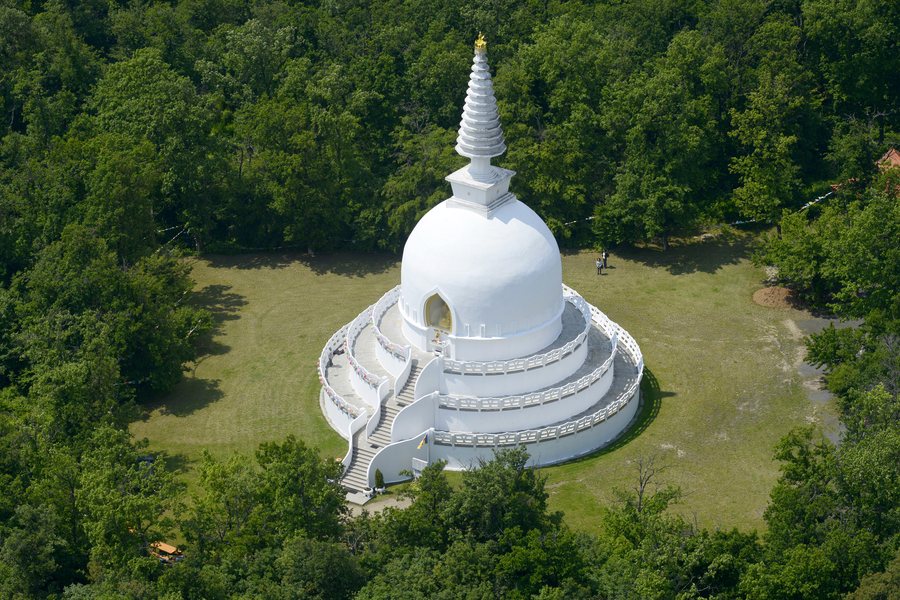
A path leads from Zalaszántó through vineyards and past weekend houses to the Béke Stupa; most of the route is paved. The nearby Tátika Castle ruins are also situated at an elevation of 412 meters. From Zalaszántó, they can be reached via an approximately half-hour forest path through woodland with wild garlic and other forest plants. The routes described therefore offer different surroundings: vineyards and weekend houses on the way to the Stupa, and forest vegetation and castle ruins at Tátika. This provides a practical guide if you want to choose excursions based on the landscape and character of the route.
Building History in the Village
The Gersei-Pethő manor house in the village center is a locally protected medieval monument. It recalls the time when the Gersei-Pethő family owned the village and Tátika Castle as a manor estate. The building thus links its medieval architectural history with the village’s former manorial history.
The Church of Saints Cosmas and Damian is a single-nave Gothic building. Its tower stands at the western end; to the east is the polygonal chancel, supported by buttresses. A church in the village dedicated to Saints Cosmas and Damian is mentioned as early as a 1236 charter. The building’s form and its historical mention offer two different points of reference for understanding Zalaszántó’s ecclesiastical history.
A Glimpse into Mill Tradition
At the Kotsy Watermill, you can see a 390-centimeter overshot waterwheel powered by water. Mill relics are also on display, and there is a gift shop. The waterwheel and relics make a visit to the mill a different experience from exploring architectural history or the volcanic landscape. Check the current opening hours before your visit.
Zala as a Wider Travel Destination
The wider destination of Zala extends beyond Zalaszántó. The Zalai Borvidék wine region covers the slopes and plateaus of the Zalai-dombság hills, as well as the northwestern slopes of the Keszthelyi-hegység. It comprises two wine-growing districts and 38 settlements. Another regional landscape is Kis-Balaton, Zala’s largest strictly protected aquatic area, covering 14,745 hectares. It is also the setting for István Fekete’s classic novels Tüskevár and Téli berek. For travelers planning their stay in the context of the wider region, Zala offers themes beyond local attractions, including wine country, a protected area and literature.
Choose Accommodation to Suit Your Interests
When looking for accommodation in Zalaszántó, you can first decide which themes you want to shape your stay: architectural history in the village center, geological formations on the outskirts, or the varied routes and places to visit.
Discover more destinations: Lovas, Szentkirályszabadja, Zánka, Vindornyalak, Gyulakeszi, Szólád, Badacsonytördemic, Balatonőszöd

_l%C3%A9gi_felv%C3%A9telen.jpg)