
Somogyvár: Royal History and Regional Cultural Attractions
Accommodation in Somogyvár
Royal Castle and Early Local History
Somogyvár is a place whose history begins with a fortified complex. The complex became a royal castle and is documented in charters dating from 1163. This establishes a clear historical connection for the local history, tied to a specific structure and a precisely dated event. The year places this connection in the 12th century and gives the historical theme a tangible timeframe.
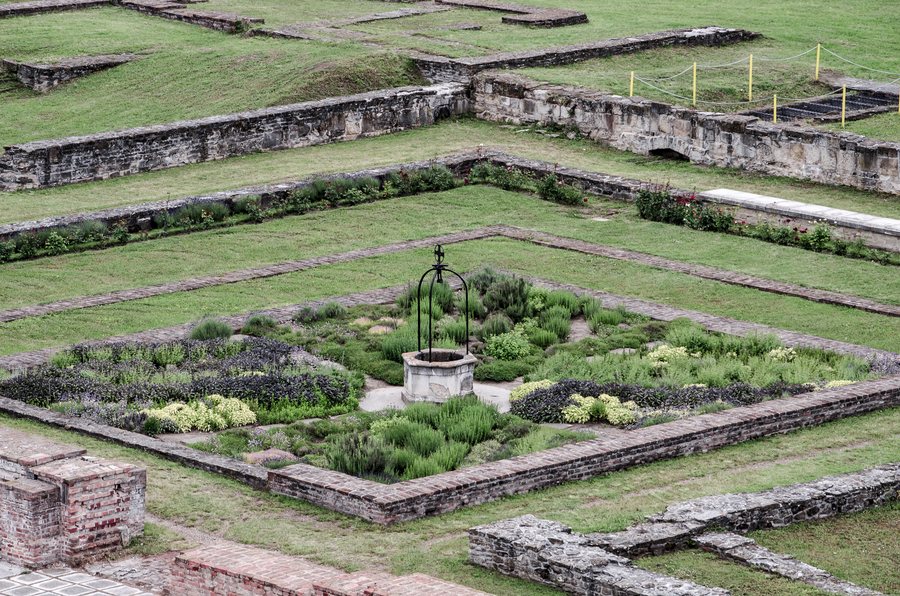
The history of the fortified complex includes its connection with the Marczali family and later the Báthori family. The Báthoris received Somogyvár as a royal grant in 1495. This sequence names two families in chronological order while also establishing that the grant to the Báthoris was a royal act. In this way, the historical focus remains closely tied to the place and its ruling connections. Anyone interested in the history of political power encounters here a sequence that extends from the fortified complex through the royal castle to the grant of 1495.
Memorial Site and Attractions in the Wider Area
The Somogyvár National Memorial Site provides a distinct visitor attraction. It can be reached by car and is accessible to visitors for an admission fee. This makes the type of access clear for practical planning: the memorial site can be reached by car, and visiting it requires an entrance fee. The specific site adds a memorial with explicitly available visitor access to the history of the fortified complex.
The ruins of the Pauline Monastery and Csillagvár are located in the wider regional area of Somogyvár. This broadens Somogyvár’s cultural and historical theme beyond the individual settlement into the wider regional area. The two attractions are among the excursion destinations associated with considering Somogyvár spatially, alongside the direct connection to the settlement itself. The memorial site provides a separate historical connection, while the Pauline Monastery and Csillagvár expand the regional scope of Somogyvár’s cultural theme.
Spatial Connections in the Landscape
Pamuki Domb and Kis-hegy are located in the immediate vicinity of Somogyvár. Kovácsi Hegy lies in the surrounding area of Somogyvár. Csúcs-hegy is located in the wider regional area of Somogyvár. The four names therefore represent different spatial levels: Pamuki Domb and Kis-hegy the immediate vicinity, Kovácsi Hegy the surrounding area, and Csúcs-hegy the wider regional area.
This distinction preserves the precise scope of each local reference. Somogyvár thus does not appear as a destination with just one uniform surrounding area, but as a place with its own historical focus and several clearly identified connections in the nearby, surrounding and wider regional areas. The history of Somogyvár is revealed not only through dates, but also through specific places, family names and spatial connections.
Other places at the same higher-level destination are Öreglak, Szőlősgyörök, Buzsák and Lengyeltóti.

.jpg)