
Hévíz: Thermal Lake and Roman Heritage
Accommodation in Hévíz
Hévíz can be explored through two very different themes: Lake Hévíz and the historical heritage of the Egregy district. This gives you different starting points for planning your trip—from the lake’s distinctive natural environment to archaeological remains and the history of winegrowing.
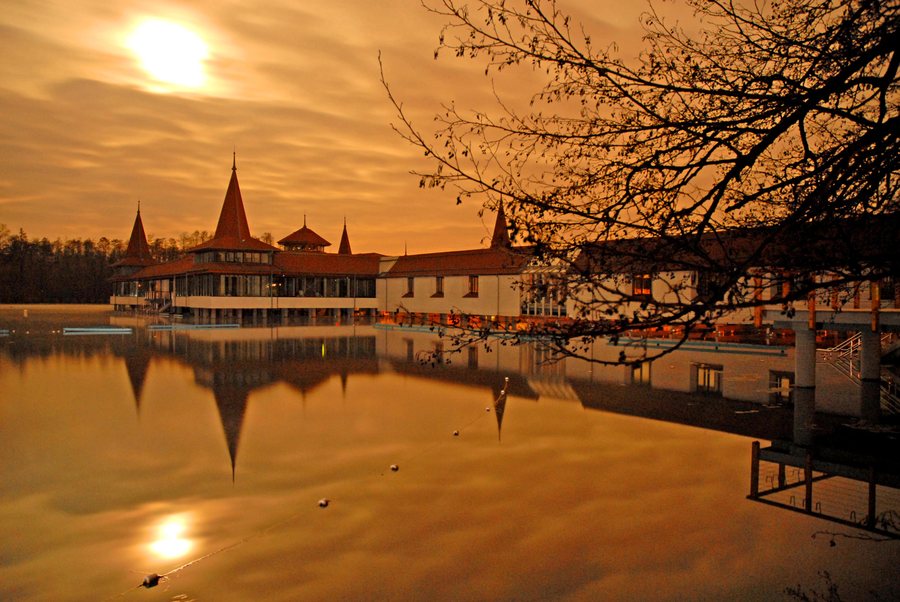 File:Hévízi-tó ősszel.jpg
Photo: Hévízi Turisztikai Nonprofit Kft. via Wikimedia Commons, CC BY-SA 3.0
Lake Hévíz as a distinctive natural environment
Lake Hévíz is the world’s largest biologically active natural thermal lake. Pink and violet water lilies float on its surface. The water also has a distinctive composition: it combines the properties of medicinal waters containing carbon dioxide, sulphur, calcium, magnesium and bicarbonate. These features give the lake its own distinctive character. It is a clear point of reference when choosing where to stay; also set aside time to explore Hévíz’s other facets if culture and landscape are among your interests.
Roman traces and winegrowing culture in Egregy
Remains of Roman villas in Egregy were inhabited from the first half of the 1st century until the beginning of the 5th century. A villa dating to the early imperial period in the Hévíz Roman Ruin Garden had warm, lukewarm and cold bathing pools. A dry Kneipp walking path runs there over the foundations of Roman building walls preserved underground. In Egregy, you can encounter both archaeological remains and a present-day pathway with a clearly described layout.
The “Korok és borok” (“Ages and Wines”) themed walking route brings together historical evidence and archaeological finds dating back to Roman times with Egregy’s centuries-old winegrowing culture. The route passes through picturesque vineyards. If you are interested in history and winegrowing, this walk offers a different focus from the water lilies and water characteristics of Lake Hévíz. It also makes clear that, alongside its Roman traces, Egregy has its own history of winegrowing.
Consider routes when choosing your accommodation
You can reach Egregy on foot from Hévíz town centre via Attila Street or Zrínyi Street: the route is about 1.5 kilometres long and takes approximately 20–30 minutes, depending on your walking pace. This information can help you plan your day while considering the location of suitable accommodation. Think about whether you expect to travel from the town centre to Egregy regularly or would prefer to shape your stay more around its historical and winegrowing themes. The information gives an approximate walking time, not a fixed duration for every pace.
Hévíz within the wider Zala destination
The wider Zala destination also offers a variety of themes for broader trip planning. The Zalai Borvidék (Zala Wine Region) developed on the slopes and plateaus of the Zalai-dombság hills and on the northwestern slopes of the Keszthelyi-hegység mountains. It comprises two wine-growing districts and 38 settlements. This regional wine landscape is a distinct context and should not be equated with the winegrowing culture of the Egregy district in Hévíz.
The Kis-Balaton is also part of Zala’s wider landscape and cultural context: it is Zala’s largest body of water, is strictly protected, and covers 14,745 hectares. It is also the setting for István Fekete’s classic novels “Tüskevár” and “Téli berek”. Keszthely is home to Festetics Castle, Hungary’s fourth-largest castle, with 101 rooms. These regional places and landscapes complement the perspective on Hévíz, but are not features of the Egregy district or Lake Hévíz itself.
More town pages in the same wider Zala destination: Sármellék, Nemesbük, Cserszegtomaj, Alsópáhok and Felsőpáhok.

