
Felsőörs on Lake Balaton: Spatial Connections and Architectural History
Accommodation in Felsőörs
Felsőörs on Lake Balaton: Spatial Connections and Architectural History
Those who place Felsőörs on Lake Balaton as a travel destination encounter two clear themes: its spatial connections with the nearby and wider surroundings, and the Romanesque provost church in Felsőörs. Kopasz-tető and Felső-hegy are located in the immediate surroundings. Nagy-Gella lies in the area surrounding Felsőörs. Esegvár and Mög-szeg lie in the wider regional surroundings of Felsőörs. The village can therefore be understood both through its surroundings and through an architecturally precisely defined building.
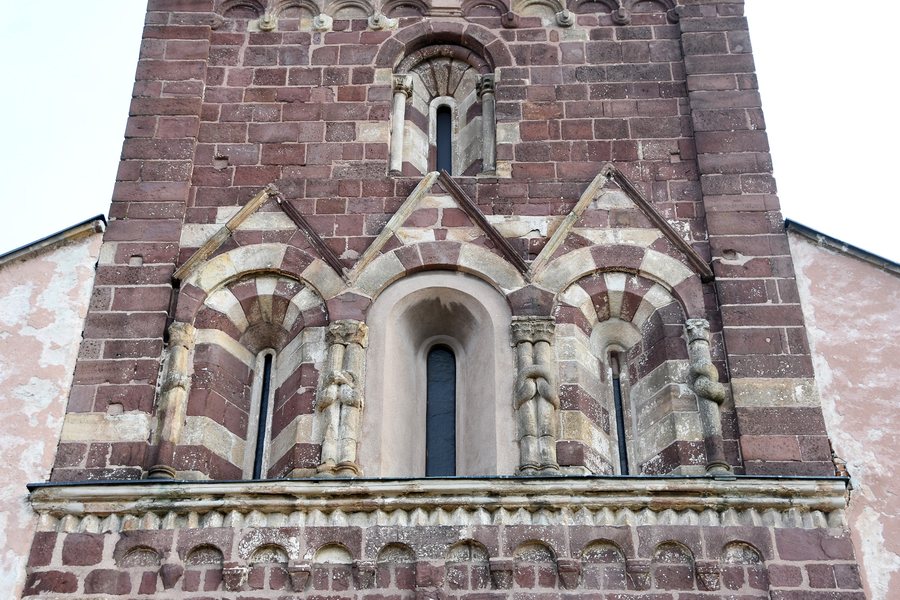 File:Felsőörs, római katolikus templom 2022 04.jpg
Photo: Pasztilla aka Attila Terbócs via Wikimedia Commons, CC BY-SA 4.0
File:Felsőörs, római katolikus templom 2022 04.jpg
Photo: Pasztilla aka Attila Terbócs via Wikimedia Commons, CC BY-SA 4.0
Spatial Connections around Felsőörs
This gradation is useful for finding your way around Felsőörs. The immediate surroundings represent the closest connection, the surrounding area provides a medium-range classification, and the wider regional surroundings represent a larger regional context. This keeps the surroundings differentiated in terms of spatial reach, rather than placing all the named locations on the same level. For travel planning on Lake Balaton, this creates a calm structure between the direct surroundings of Felsőörs and the more broadly defined regional connections.
The Romanesque Provost Church
The Romanesque provost church of Felsőörs has a western tower façade, a three-aisled vaulted interior, and a semicircular apse. From the outside, the western tower façade forms part of the clearly recognizable architectural design; inside, three aisles structure the vaulted space. The semicircular apse provides a rounded termination. The church can therefore be described through its exterior façade, its internal division into three aisles, and its apse. For those interested in culture, the provost church thus brings spatial form and historical traces together. The visible form of the building and its later historical changes remain closely connected.
Foundation at the End of the 12th Century
The Felsőörs provostship was founded by the Örsi family at the end of the 12th century, when construction of the church began. The foundation and the start of construction therefore belong to the same historical phase. For dating the building, this starting point is just as important as its Romanesque form: the establishment of the provostship and the beginning of the church’s construction are tied to the end of a specific century. The Örsi family is thus directly connected with the founding of the Felsőörs provostship.
Damage and Restoration
The church suffered severe damage in the mid-16th century. In 1736, it was restored in the Baroque style. The period between the Romanesque origins and the later restoration therefore represents a clearly dated development in the building’s history. The chronology includes a medieval beginning, severe damage in the middle of the 16th century, and the Baroque restoration carried out in 1736. Those viewing the provost church therefore encounter both its basic Romanesque form and a later chapter of its history associated with the Baroque style.
Further destinations for orientation: Várvölgy, Marcali, Vaszoly, Nemesvita, Kapolcs, Balatonvilágos, Badacsonytomaj, Tagyon

